These papers were written primarily by students and provide critical analysis of Erasure by Percival Everett. He speaks of writing fiction as a Zen-like process of unlearning, each novel leaving him more aware of his ignorance than the last. She hated them intellectual elites in People." It was weather. Percival Everett's new novel The Trees hits just the right mark. SIMON: Oh, am I relieved. No one can control what minds do when reading; it is entirely private. WebEverett was a Pulitzer Prize finalist in 2020 with his novel Telephone. FICTION: In this dark but witty satire, Percival Everett explores racism, vengeance and the horrors of lynching. You abandon a story, he says. Rebecca Clarke. A reporter on the scene used the word horde. The author uses humour throughout the text, from wordplay to punchlines and even slapstick gags.
We ask, as the modern day mistreatment of Black individuals continues through things such as police brutality, should we really stop what Everett is doing, that being, granting justice and freedom to individuals such as Emmett Till Bill Gilmer Dorothy Malcom W.W. Watt Bartley James Stella Young and so many others?
Webnancy spies haberman kushner. WebThe case assumes a supernatural cast when the Black man disappears from the morgue, then reappears at a second murder scene: another member of the Milam clan has been killed. Baby Ralph, the narrator of Glyph (2014), terrifies adults with his mastery of languageespecially his father, an insecure post-structuralist academicupending several disciplines by writing prodigiously yet refusing to speak. Rise, it said, Rise. Granny C, it turns out, is a fictionalized Carolyn Bryant Donham, whose accusation that Emmett Till had whistled at and grabbed her, at the country store in Money where she worked, instigated the twentieth centurys most notorious lynching.
(He wishes someone would do the same to the fucking Hispanics who took his job.) You can find her on Twitter @BellCV. By ending the novel "hypotheses non fingo," Percival Everett reveals he has no agenda or political interests. Join our Booker Prize Book Club Challenge, 13 things you need to know about the Booker Prize 2022 longlist, What everyone is saying about the Booker Prize 2022 shortlist, Why you should read the Booker Prize 2022 shortlist, according to our judges, Six things you need to know about the Booker Prize 2022 shortlist, Meet the authors: interviews with the Booker Prize 2022 longlisted writers. Everett looks at race in America with an unblinking eye, asking what it is to be haunted by history, and what it could or should mean to rise up in search of justice.
I write fiction., Beneath his works ever-changing surface lies an obsession with the instability of meaning, and with unpredictable shifts of identity. Everett makes clear that the sins of the fathers fall upon all white Americans anyone who has benefited from terror, intimidation or systematic repression, regardless of Its an irresistible page-turner, hurtling headlong with swagger, humour, relish and rage. The novels ending is also pure Everett: chaos, inscrutability, fin. When Damon Thruff, a young Black professor specializing in the history of lynching, arrives in Money to assist Mama Z, she tells him that shes read his work and finds it unfeeling: You were able to construct three hundred and seven pages on such a topic without an ounce of outrage. The figure is curiously close to the number of pages in The Trees, implicitly questioning not only Damons sang-froid but Everetts. But to tell the truth, if that's the case, then they wouldn't understand anyway. Some have cat-like faces and even purr when you scratch their heads. These notes were contributed by members of the GradeSaver community. Sometimes Everett appears reluctant to commit his attention, or to decide between drawing caricatures and fleshing out human quandaries. The alienation of Jim, Ed, and Herberta, as they pursue vigilantes with whom they quietly sympathize? And pay a modest price for it. I dont even own a rope. (p. 110). The actors cipher-like versatilitya dignifiedemissary of Black America in every roleprovides endless material for parody: Not Sidney escapes from prison shackled to another inmate (The Defiant Ones), dates a light-skinned girl from a colorist family (Guess Whos Coming to Dinner), and fixes a roof for a commune of religious women (Lilies of the Field). EVERETT: I suppose that's an optimistic way of putting it. And in my imagination, they come from the Acme Cadaver Company, which acquires bodies and then sells them.
The Trees, Percival Everetts new literary thriller, revolves around a Mississippi scandal that explores our nationwide web of racist violence and imagines justice The Trees, in its rigorous denial of sentiment, shuts down such catharsisas if to say that funeral oratory is inappropriate when so many victims have yet to be counted. Similar murders occur elsewhere in the area, and, each time, a spectral body appears, stirring terrified rumors of a walking dead Negro man. The killings spread throughout the country; in several Western states, the vanishing corpse seems to be that of an Asian man. Brought up in a family of doctors and dentists, in Columbia, South Carolina, he studied the philosophy of language in graduate school, drifting from the dissection of invented dialogue into full-blown fiction organically. Percival Everett's page-turning new detective novel is at once gruesome and screamingly funny. You can help us out by revising, improving and updating He considers it so profane he renames it "Fuck.".
That's my question. This attempt on the part of Everett to give all victims of lynching in America their due, rather than restrict himself to a single historical (or fictionalized) example thereof, ends up becoming the novel's main shortcoming. Beyond the South, there are revenge killings in Rock Springs, Wyoming, where dozens of Chinese miners were massacred, in 1885; in Carbon County, Utah, where a Black coal miner was hanged from a cottonwood tree, in 1925; and in Duluth, Minnesota, where an unemployed man fondly reflects on his grandfathers role in the towns lynching of three Black men, in 1920. There's no missing the gravity, but I do think the humor helps you take the next step, if that makes any sense. GradeSaver, 1 December 2019 Web. to spite her radical parents. Many might tell Telephone (2020), which was a finalist for a Pulitzer Prize, is split even more dramatically. 2023 Cond Nast. That can be powerful, but it can also very easily miss its target. the trees percival everett ending explained WebIn the town of Money, Mississippi, a white man named Junior Junior Milam is found murdered in his home. To make art about lynching is an increasingly fraught endeavor.
(I was a baby fat with words, but I made no sound, he reflects.) Soon after he reports the apparent killing, the body vanishesonly to reappear, seemingly drowned, in a nearby river. The focus shifts from Everetts characters to the phenomenon of lynching in all its geographic breadth, intangible influence, and individual particularity. Rise. The music of the Jackson Five blared. The detectives zero in on what seems like a conspiracy involving a soul-food restaurant (with a secret dojo) and a centenarian root doctor, Mama Z, who keeps records of every lynching in America.  He was taken to the Tallahatchie River, where he was shot in the head. Nobody feels this more keenly than the trio of detectives, who are constantly stymied by being Black and blue. The white residents of Money hate them out of prejudice; the Black ones distrust them as cops. Mama Zs patient revenge? 086 079 7114 [email protected]. Everything about The Trees is relevant to todays world. Publicity-avoidanthe told audiences on his one book tour, for his twelfth novel, Erasure (2001), that he was there only because he needed money for a new roofEverett likes to downplay his literary vocation. Now that intersectionality is the name of the literary game, his latest book lives not within one genre He is educated, but more importantly, he understands the connection between mythology and truth.
So you just relax. The Trees is an almost disconcertingly smooth narrative, the short chapters dealt as quickly as cards. The novelist suggests that this character is truly an inspired genius. It's a novel of compelling contrasts: frank, pitiless prose leavened by dark humor; a setting that is simultaneously familiar and strange; a genre-defying, masterful blend of the sacred and the profane. SIMON: President Obama has often quoted Martin Luther King in saying that the arc of the moral universe is long, but it bends towards justice. What is the significance of this song and how does it intertwine with Everetts narrative? In fact, after I wrote the first page, my admission to my wife was, well, I'm not being fair, and I'm not going to do anything about it. Assumption is a set of three stories about Ogden Walker, a deputy in rural New Mexico. SIMON: What's it like to have this novel inside your mind and heart and then out? SIMON: Yeah. The men beat and tortured the boy, gouging out his eye. The Guardian said of The Trees, As with the films of Jordan Peele, the paranormal is used to depict the African American experience in extremis, and here supernatural horror and historical reality collide in dreadful revelation. Is it fair to describe Everetts novel as conventional horror? The New Yorker may earn a portion of sales from products that are purchased through our site as part of our Affiliate Partnerships with retailers. Editor's note: This review uses repeated quotations from the book that contain racial slurs. It has a shelf life. Later, he buys a used truck with a Confederate-flag decal, sparking a trend that turns the hateful symbol into an emblem of Black pride. Perhaps nothing epitomizes the novel's style more than this description of one particularly loathsome character's death: Before he could say Lawdy, before he could say Jesssssssussss, before he could say nigger, a length of barbed wire was wrapped twice around his thick, froglike neck. Features Win in our competition to celebrate the Booker Prize 2022 Rather, he intends the novel as a depiction of real life, such that perhaps the novel is best categorized as a roman a clf.
Guns and Ammo?.
Percival Everett, whose "Telephone" (2020) was a finalist for the Pulitzer Prize for Fiction, has managed to write a fast-paced and witty novel about a somber subject that lends itself to neither treatment. Mixing horror, humor and Why has he not - as he said he would - erased them? 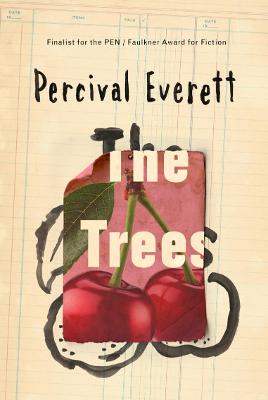 The narrative hinges on a series of confounding and gruesome murders in the town of Money, Mississippi, site of the 1955 murder of Emmett Till. Their epithets are mixed with language more at home in 1955 than today so not just "nigger" but also "boy," "colored" and "Negro."
They recall Coffin Ed Johnson and Grave Digger Jones of the late Chester Himes' Harlem Detectives novels but are noticeably less violent. A violent history refuses to be buried in Percival Everetts striking novel, which combines an Farther away, through the center of the room, naked cadavers glided along, head to toe, on a conveyer belt. antics, an online white-supremacist meeting) and stark meditations on what one character describes as the slow genocide of American lynching. The octogenarian felt tender sorrow over Tills fate but offered no apology. Discuss the benefits of a narrative structure like this - does it allow the reader to experience a breadth of viewpoints? They're with the Mississippi Bureau of Investigation, and they're in the small town of Money to investigate the murder of two men in the back room of the same shotgun-style house - one, a white man who's disfigured in a way so gruesome we can't tell you without a trigger warning, if you please; the other, a Black man, seems to just walk out of the morgue. Yes, I'm not fair in this novel. He received the Ivan Sandrof Lifetime Achievement Award at the National Book Critics Circle Awards 2022. and like a tornado it would destroy one life and leave the one beside it unscathed. The material on this site may not be reproduced, distributed, transmitted, cached or otherwise used, except with the prior written permission of Cond Nast. The Trees is a novel about resurrection, repetition and recursion, and accountability all course concepts from our African American literature class thus far. But instead of a soulful historical novel that the white reading public could buy in droves in order to feel invigoratingly ashamed, Everett has produced a mixture of zombie horror, detective story and Tom Sharpe-esque farce, making comedy out of subject matter so inappropriate that this reader started looking round nervously in fear that my barks of laughter might be taken down and used in evidence against me., The genius of this novel is that in an age of reactionary populism it goes on the offensive, using popular forms to address a deep political issue as page-turning comic horror. This course epigraph, as well as Everetts The Trees, in a way, allows me to interpret my own semesters story in this class. "About something I wished I hadn't done. 

The Trees is published by Influx (9.99). Smart-asses. The old woman appears to be having a stroke but is actually reflecting on something I wished I hadnt done. Not affiliated with Harvard College. Like it say in the good book, what goes around comes around.What good book is that? Charlene asked. Special detectives Ed Morgan and Jim Davis are the big-city heat from Hattiesburg. And they used to have cross burnins a lot more and family picnics and softball games and all such, said Donald. Thruff informs Mama Z, When I write their names they become real, not just statistics. Everett's novel is not just a story about some black people. 086 079 7114 [email protected].
After you claim a section youll have 24 hours to send in a draft. In one uncanny moment, the detectives arrive at a bar in Moneys Black neighborhood just as a young woman with a Mohawk begins a haunting performance of Strange Fruit. The scene quietly undercuts any presumption of racial solidarity, as the watching officers realize that theyve been shut out of a community secret. Visit our website terms of use and permissions pages at www.npr.org for further information. faculty member. By signing up, you agree to our User Agreement and Privacy Policy & Cookie Statement. An uncanny literary thriller addressing the painful legacy of lynching in the US, by the author of Telephone. But it's been present.  As he once said, My goal is to know nothing, and my friends tell me Im well on my way.. By having Thruff write all of these names down and also, Everett cementing these names in his novel for all to read it grants justice and freedom to these victims. Granny C is based on Carolyn Bryant, the woman who was partly responsible for the real-life lynching of Emmett Till in 1955. From Emmett Till to Alton Sterling, the list occupies an entire chapter. SIMON: The murders are gruesome in detail, the language is rough and there are racial epithets of all kinds, and the humor is politically incendiary. Six decades later Bryant at least partially recanted her claim. The novels epigraph, from Sren Kierkegaard, suggests the worlds bleakest choose-your-own-adventure: Do it or do not do ityou will regret both. But the geologists inevitable loss is also strangely freeing; with nothing left to fear, he attempts a mad act of heroism in the rural Southwest, drawn by an anonymous note that reads Please Help Us..
The author who wrote this epigraph, Audre Lorde, was one who dedicated her life and her creative talent to confronting and addressing injustices such as racism, sexism, classism, and homophobia she was one who fought for justice and never wrote on topics that she did not strive to grant justice and honor to, such as African American rights and Black individuals who were wronged in the years before and during the time she began to write.