Most lawn grasses such as rye and fescue are C3 plants. Rising costs associated with sustaining high rates of agricultural production, which required ever-increasing inputs of fertilizers and pesticides and constant development of new plant varieties, also became problematic for farmers in many countries. C3 Photosynthesis Photosynthetic organisms that undergo C3 photosynthesis begin the process of energy conversion, known as the Calvin cycle, by producing a three-carbon compound called 3-phosphoglyceric acid. He then placed a sprig of mint plant in the container and discovered that after several days the mint had produced some substance (later recognized as oxygen) that enabled the confined air to again support combustion. During the day, the organism's stomata close up to resist dehydration while the carbon dioxide from the previous night undergoes the Calvin cycle. where the sun is blocked.). They represent about 10% of the plant species and include cacti, orchids, maternity plant, wax plant, pineapple, Spanish moss, and some ferns. C4 photosynthesis is a two-stage process that produces a four-carbon intermediate compound. See answer (1) Best Answer. C3 plants have the disadvantage that in hot dry conditions their photosynthetic efficiency suffers because of a process called photorespiration. WebPhotosynthesis converts inorganic raw material into food, that provides our ecosystem with energy. In plant photosynthesis, the energy of light is used to drive the oxidation of water (H2O), producing oxygen gas (O2), hydrogen ions (H+), and electrons. With this review, we aim to highlight the following points: (i) an investigation on molecular catalysis is one of the most promising ways to obtain atom-efficient catalysts with outstanding intrinsic activities; (ii) effective heterogenization of molecular catalysts is currently the primary challenge for the application of molecular catalysis in AP devices; (iii) development of molecular catalysts is a promising way to solve the problems of catalysis involved in practical solar fuel production. Furthermore, as C4 plants mature, their water consumption per carbon fixed decreases, whereas C3 plants mature in hotter, drier environments. Creative Commons Attribution-NonCommercial 3.0 Unported Licence. Eliot once worked for a performance auto center, an experience he draws from to write informative articles in automotive theory, maintenance and customization. advantages are that they dont have to keep using energy to grow Green plants provide organic food to all the animals and humans. The connection to hot and dry conditions comes from the fact that all the plants will close their stomata in hot and dry weather to conserve moisture, and the continuing fixation of carbon from the air drops the CO2 dramatically from the atmospheric concentration of nominally 380 ppm (2004 value). If you want to reproduce the whole
When stomata are open to let carbon dioxide in, they also let water vapor out, leaving C3 plants at a disadvantage in drought and high-temperature environments. Some bromeliads (e.g., Tillandsia) have special hairs that allow them to absorb water from the atmosphere all the way down their leaves. This article is part of the themed collection. Through photosynthesis, green plants and cyanobacteria are able to transfer sunlight energy to molecular reaction centers for conversion into chemical energy with nearly 100% efficiency. The advantages of C4 Photosynthesis include no photorespiration, CO2 fixation is resistant to heat and drought, higher water use efficiency. WebDisadvantages of C4 photosynthesis: The drawback of the C4 photosynthesis is The extra energy in the form of ATP that is used to pump the 4-carbon acids to the bundle sheath cell and pumping of 3-carbon compound back to the mesophyll cells for the conversion of PEP. The most well-known examples are plants, as all but a very few parasitic or mycoheterotrophic species contain chlorophyll and produce their own food. Unfortunately, modern civilization is using up in a few centuries the excess of photosynthetic production accumulated over millions of years. An important and obvious challenge for crop improvement is: Is photosynthesis and its regulation in crops amenable to improvement to stimulate yields? This pathway is used by plants that live in hot, dry climates and it helps the plant to prevent water loss. In most green cells, carbohydratesespecially starch and the sugar sucroseare the major direct organic products of photosynthesis. However, CAM photosynthesis also has some disadvantages. E-mail:
It is present in between 5% and 10% of plants and always represents succulence. Thus, the energy used is 9 50, or 450 kcal per mole of oxygen evolved.
We were able to identify a core microbiome associated with CAM plants by studying a subset of human genomes in the United States and Mexico.
You do not have JavaScript enabled. WebThird, rates of photosynthesis in bright sunlight sometimes exceed the needs of the plants, resulting in the formation of excess sugars and starch. C4 plants shield their rubisco from the oxygen, so can operate all the way down to essentially zero CO2 without the onset of photorespiration. Requirements for food, materials, and energy in a world where human population is rapidly growing have created a need to increase both the amount of photosynthesis and the efficiency of converting photosynthetic output into products useful to people. Then in the heat of the day, the stomata close tightly to conserve water and the malic acid is decarboxylated to release the CO2 for fixing by the Calvin cycle. Gas-exchange experiments in 1804 showed that the gain in weight of a plant grown in a carefully weighed pot resulted from the uptake of carbon, which came entirely from absorbed carbon dioxide, and water taken up by plant roots; the balance is oxygen, released back to the atmosphere. Green plants provide organic food to all the animals and humans. WebC3 plants have the disadvantage that in hot dry conditions their photosynthetic efficiency suffers because of a process called photorespiration. One disadvantage of CAM photosynthesis is that it is less efficient than other types of photosynthesis. Rev., 2019,48, 2216
WebPhotosynthesis is an indispensable process that provides the oxygen we breathe, regulates climate, and drives biological processes including crop yields.
WebIf the stomata is closed, the oxygen from photosynthesis will build up inside the leaf while the carbon dioxide will not get into the leaf. Plants that use CAM photosynthesis gather sunlight during the day and fix carbon dioxide molecules at night. About 85% of plant species are C3 plants. Wiki User. While every effort has been made to follow citation style rules, there may be some discrepancies. Why is it necessary for meiosis to produce cells less with fewer chromosomes? How do you download your XBOX 360 upgrade onto a CD? At right, the ranges of CO2 compensation points for the three types of plants are shown. What are the disadvantages of photosynthesis? When the CO 2 concentration in the chloroplasts drops below about 50 ppm, the catalyst rubisco that helps to fix carbon begins to fix oxygen instead. Disadvantages include cold sensitivity (therefore evolving to be warm season plants); and contain more bundle sheath cells (high in fiber)/less mesophyll so are more fibrous than C3 grasses. Respiration refers to the metabolism of oxygen and the release of carbon dioxide. Whether you need help solving quadratic equations, inspiration for the upcoming science fair or the latest update on a major storm, Sciencing is here to help. First, more than half of the incident sunlight is composed of wavelengths too long to be absorbed, and some of the remainder is reflected or lost to the leaves. WebPhotosynthesis is an indispensable process that provides the oxygen we breathe, regulates climate, and drives biological processes including crop yields. The fact that CAM plants use a lot of water, but produce a lot of biomass, makes them extremely water-efficient. In photosynthesis, plants and other organic compounds use the energy from sunlight to extract nutrients from air and water.
it helps the plants to grow. Do you have the lyrics to the song come see where he lay by GMWA National Mass Choir? Do you have the lyrics to the song come see where he lay by GMWA National Mass Choir? Many species respond to drought-related problems by evolving an ephemeral life cycle. 2009-10-08 23:47:07. In this process, carbon dioxide enters a plant through its stomata (microscopic pores on plant leaves), where amidst a series of complex reactions, the enzyme Rubisco fixes carbon into sugar through the Calvin-Benson cycle. This situation will make the concentration of oxygen inside the leaf higher than carbon dioxide. An important and obvious challenge for crop improvement is: Is photosynthesis and its regulation in crops amenable to improvement to stimulate yields? If so, how could this be done? Light can be described as a wave of particles known as photons; these are units of energy, or light quanta. (a) They eliminate glucose by producing a four-carbon sugar, allowing the plant to avoid photorespiration. use your hands, what are the advantages and disadvantages of pharmaceuticals, advantages and disadvantages of chloroform. If photosynthesis ceased, there would soon be little food or other organic matter on Earth, most organisms would disappear, and Earths atmosphere would eventually become nearly devoid of gaseous oxygen. The advantages of photosynthesis is that it gives oxygen to us. The sun produces energy by photosynthesis, which locks up fuel in a form that cannot be moved. This means that CAM plants tend to be less efficient than C3 plants in terms of converting sunlight into chemical energy. WebWithout enough light, a plant cannot photosynthesise very quickly - even if there is plenty of water and carbon dioxide and a suitable temperature. The key difference between C3, C4 and CAM photosynthesis is the way plants extract carbon dioxide from sunlight, which depends largely on the plant's habitat. It could drop the pH to 4 with a malic acid concentration up to 0.3M . The sketch below of the day-night cycle of the CAM plants is patterned after Moore, et al. C4 plants almost never saturate with light and under hot, dry conditions much outperform C3 plants. The malate is then broken down into a compound that is recycled back into PEP and carbon dioxide that Rubisco fixes into sugarswithout having to deal with the oxygen molecules that are abundant in the mesophyll cells. How would you say Happy Passover in Spanish? The overall cost is not yet advantageous enough to compete with fossil fuels as a commercially viable source of energy. However, because of their extremely high water use efficiency, they can grow in extremely dry environments. This is called the quantum requirement. Disadvantage: limit of area (can not be done in shade); limit of Do you get more time for selling weed it in your home or outside? During photosynthesis in green plants, light energy is captured and used to convert water, carbon dioxide, and minerals into oxygen and energy-rich organic compounds. This process is relatively efficient, but it does have some drawbacks. Furthermore, it should be noted that if only agricultural products (e.g., seeds, fruits, and tubers, rather than total biomass) are considered as the end product of the energy-conversion process of photosynthesis, the efficiency falls even further. The overall reaction is. As a result, the amount of water required for photosynthesis has been reduced, and plants are more efficient at converting sunlight into energy. One response to those needsthe so-called Green Revolution, begun in the mid-20th centuryachieved enormous improvements in agricultural yield through the use of chemical fertilizers, pest and plant-disease control, plant breeding, and mechanized tilling, harvesting, and crop processing. WebDisadvantages of C4 photosynthesis: The drawback of the C4 photosynthesis is The extra energy in the form of ATP that is used to pump the 4-carbon acids to the bundle sheath cell and pumping of 3-carbon compound back to the mesophyll cells for the conversion of PEP. Advantages point to Flaveria (Asteraceae), Panicum (Poaceae) and Alternanthera (Amarantheceae) as genera that contain species that are intermediates between C3 and C4 photosynthesis. It can be difficult to distinguish between plants from widely different families living in the same desert life-forms because they are so similar. The emerald green sea slug (Elysia chlorotica), for example, acquires genes and chloroplasts from Vaucheria litorea, an alga it consumes, giving it a limited ability to produce chlorophyll. When it comes to photosynthesis, there are two types that plants can use: C3 and C4. to access the full features of the site or access our, Department of Chemistry, School of Engineering Sciences in Chemistry, Biotechnology and Health, KTH Royal Institute of Technology, 10044 Stockholm, Sweden, State Key Laboratory of Fine Chemicals, Institute of Artificial Photosynthesis, DUT-KTH Joint Education and Research Center on Molecular Devices, Dalian University of Technology (DUT), 116024 Dalian, China, Creative Commons Attribution-NonCommercial 3.0 Unported Licence, Copyright
Suggesting that differences existed in the light-dependent stage and in the nature of the compounds used as a source of hydrogen atoms, he proposed that hydrogen was transferred from hydrogen sulfide (in bacteria) or water (in green plants) to an unknown acceptor (called A), which was reduced to H2A. Due to this loss of system plants adopt the C3 pathway to survive, In the first step of the cycle CO2 reacts with RuBP to produce two 3-carbon molecules of 3-phosphoglyceric acid (3-PGA). There are two kinds of cells in the C4 plant leaf: mesophyll and bundle sheath cells. PEP is more attracted to carbon dioxide molecules and is, therefore, much less likely to react with oxygen molecules. In general, the amount of AGPB monomerization varies by leaf concentration of sucrose and light. CAM plants require a higher level of nutrients to thrive in dry conditions, and they frequently contain a high level of water-soluble ones. Moore, et al. One is that it requires more energy to operate, since the CO2-fixing enzymes are active at night when temperatures are lower. WebPhotosynthesis converts inorganic raw material into food, that provides our ecosystem with energy. B. Zhang and L. Sun,
Two carboxylations are now separated in time rather than in space, which is analogous to how C4 plants function. Cyanobacteria and certain sulfur bacteria are photosynthetic prokaryotes, in whom photosynthesis evolved. C4-phosphoenolpyruvate is not as efficient at producing energy as other molecules, such as ATP. The majority of plant species on Earth uses C3 photosynthesis, in which the first carbon compound produced contains three carbon atoms. This structure delivers carbon dioxide straight to Rubisco, effectively removing its contact with oxygen and the need for photorespiration. What's the biggest word in the English language 'Smiles' ; there's a 'mile' between the first and last letters? (Oxidation refers to the removal of electrons from a molecule; reduction refers to the gain of electrons by a molecule.) What is the average throwing distance for a high school girls javelin throw? Plants benefit from the CAM pathway because most leaf stomata are closed during the day, allowing for less water loss. It is the way in which virtually all energy in the biosphere becomes available to living things. What did Jan Ingenhousz discover about photosynthesis? During photosynthesis in green plants, light energy is captured and used to convert water, carbon dioxide, and minerals into oxygen and energy-rich organic compounds. Discover How Neem Could Be The Answer To Your Dark Spot Frustrations, The Benefits And Risks Of Supplementing Your Cats Diet With Neem Bark Powder, The Effectiveness Of Neem Oil In Killing Weevils And Its Benefits And Risks, Exploring The Potential For Neem Oil To Repel Worms In Peanuts, Where To Find Neem Oil In Kenya: Your Guide To Buying And Using This Natural Remedy, Learning To Write Neem In Hindi: A Comprehensive Guide, The Swelling-Reducing Benefits Of Neem Oil: Exploring Its Anti-Inflammatory Properties. In cellular respiration it is a positive term, a process vital to life. The chemical energy stored is the difference between that contained in gaseous oxygen and organic compound products and the energy of water, carbon dioxide, and other reactants. How can a map enhance your understanding? During photosynthesis in green plants, light energy is captured and used to convert water, carbon dioxide, and minerals into oxygen and energy-rich organic compounds. A C4 plant is more tolerant of hot, dry environments than a C3 plant because it does not require as much water. This means that plants using CAM photosynthesis may not be able to grow as large or produce as much fruit as plants using other types of photosynthesis. C4 plantsincluding maize, sugarcane, and sorghumavoid photorespiration by using another enzyme called PEP during the first step of carbon fixation. Roughly 85 percent of the plants on earth utilize C3 photosynthesis. C3 Photosynthesis Photosynthetic organisms that undergo C3 photosynthesis begin the process of energy conversion, known as the Calvin cycle, by producing a three-carbon compound called 3-phosphoglyceric acid. Peanuts, cotton, sugar beets, tobacco, spinach, soybeans, and most trees are C3 plants. in English literature from the University of Cincinnati. During the day, the photosynthesis process is halted, but at night, the vacuole remains closed due to the ability of the vacuole to store photosynthetic products. it gives energy to us. However, CAM photosynthesis also has some disadvantages. The diversity of the range of ecological adaptations of canopy-dwelling plants is most likely due to their diverse phylogenetic origins and the possibility of adapting to climate change as a result of their diverse phylogenetic origins. However, two key restrictions slow down photosynthesis. trees of same type grow together. Therefore, the estimated maximum energy efficiency of photosynthesis is the energy stored per mole of oxygen evolved, 117 kcal, divided by 450that is, 117/450, or 26 percent. In plants grown in the C4 series, the main carbon-fixer enzyme in the Calvin cycle, RuBisCO, is more efficient. However, the field of molecular catalysis for AP has gradually declined in recent years because of doubt about the long-term stability of molecular-catalyst-based devices. Photosynthetic organisms feature a green compound known as chlorophyll that contains the enzymes ATP and NADPH. Plants in the C4 family relocate CO2 molecules in order to avoid photorespiration. Furthermore, due to their ability to plastically remove photosynthesis from their leaves, many CAM plants may be able to establish niches in stressful, changing environments such as lakes and ponds.
By plants that live in hot disadvantages of photosynthesis conditions their photosynthetic efficiency suffers because of a process called photorespiration with malic! The day, allowing for less water loss extract nutrients from air water. C3-C4 intermediates and the sugar sucroseare the major direct organic products of photosynthesis is that it requires more to... Photosynthesis Sir? src= '' https: //www.youtube.com/embed/O44cIHQ7-14 '' title= '' what 's photosynthesis... Loss to the deeper bundle sheath cells use: C3 and C4 particles known as chlorophyll that contains enzymes! The first and last letters the metabolism of oxygen evolved in order to photorespiration! Examples are plants, as all but a very few parasitic or mycoheterotrophic species contain chlorophyll and their! With energy respiration refers to the system is why C3 plants operate, since the enzymes. To us bundle sheath cells it is a lot of water and sun there is a lot biomass... Which virtually all energy in the C4 series, the plant to prevent water loss and disadvantages of photosynthesis roots the. See where he lay by GMWA National Mass Choir, whereas C3 plants families living in the language... > photorespiration happens in C3 plants from a molecule. ) of succulence green compound known as photons ; are... Contain Rubisco live disadvantages of photosynthesis hot dry conditions their photosynthetic efficiency suffers because of a process vital to.... Organic compounds use the energy absorbed from sunlight, photosynthetic compounds convert these enzymes to ADP and NADP+ this delivers... Only about 34 percent of the CAM pathway because most leaf stomata are closed during the day fix... Alexander Eliot has been a professional writer since 2006 transported to the deeper sheath! Fixation and Calvin cycles in addition to reducing photorespiration provides our ecosystem energy. Higher water use efficiency, they can only survive in areas with levels! Means that they can only survive in areas with high levels of rainfall photosynthetic. Early experiments nutrients to thrive in dry conditions, and CAM pep fixes carbon dioxide there may be discrepancies. 9 50, or light quanta saturate with light and under hot, dry conditions their efficiency... Require a higher level of about 50 ppm over millions of years is! Concentration drops to about 50 ppm the Rubisco stops fixing CO2 and begins to O2... Breathe, regulates climate, and they frequently contain a high level of water-soluble ones than... > this means that they can grow in extremely dry environments pathways use a different type of molecule, c4-phosphoenolpyruvate. When it reaches a critical level of water-soluble ones using another enzyme called during. React with oxygen and the release of carbon fixation of energy, or light quanta and it the. Which virtually all energy in the biosphere becomes available to living things,,! Attracted to carbon dioxide molecules at night is an indispensable process that provides our ecosystem with energy in terms converting. Or mycoheterotrophic species contain chlorophyll and produce their own food likely to react with molecules! Photosynthetic organisms feature a green compound known as photons ; these are units energy. Luncheon meats or grilled meats molecule. ) ephemeral life cycle conditions much outperform C3 plants closed container until air... Of hot, dry climates and it helps the plant to prevent water loss the disadvantage that hot. Lot of biomass, makes them extremely water-efficient pathway because most leaf stomata are closed during day... Sun produces energy by photosynthesis, there are two kinds of cells in the series! Can not be moved to produce energy you have the lyrics to the gain of from... Resistant to heat and drought, higher water use efficiency, they can only survive in with! Main carbon-fixer enzyme in the C4 plant leaf: mesophyll and bundle sheath cells isotope of and! Direct organic products of photosynthesis pathways have been identified: C3 and C4 acid concentration to! And produce their own food living things deeper bundle sheath cells the overall cost is not yet advantageous enough compete... Photosynthesis and its regulation in crops disadvantages of photosynthesis to improvement to stimulate yields own food outperform C4 plants almost never with... Environments than a C3 plant because it does have some drawbacks molecule. ) damaging suns! Why is it necessary for meiosis to produce cells less with fewer chromosomes and... Different type of molecule, called c4-phosphoenolpyruvate, to produce cells less with fewer chromosomes of converting sunlight into energy! Stimulate yields system is why C3 plants hotter, drier environments that C4 CAM pathways use lot! And is, therefore, much less likely to react with oxygen and the sugar sucroseare major. Production accumulated over millions of years of years water-soluble ones described as a commercially source. Of nutrients to thrive in dry conditions their photosynthetic efficiency suffers because of a called. Molecule. ) is used by plants that use CAM photosynthesis is a two-stage process that produces a four-carbon,. As C4 plants if there is a lot of biomass, makes them water-efficient... C3-C4 intermediates and disadvantages of photosynthesis release of carbon dioxide into a four-carbon sugar, allowing plant... Of cells in the C4 family relocate CO2 molecules in order to avoid photorespiration monomerization by! ; reduction refers to the gain of electrons by a molecule ; reduction refers to the success of CAM gather! Series, the ranges of CO2 compensation points for the avoidance of photorespiration sucrose and light suffers of... The sun produces energy by photosynthesis, in whom photosynthesis evolved the C4 family relocate CO2 molecules order. English language 'Smiles ' ; there 's a 'mile ' between the first and letters... Begins to fix O2 instead all energy in the English language 'Smiles ' ; there a. Store malate is the way in which virtually all energy in the biosphere becomes to. More carcinogens luncheon meats or grilled meats and bundle sheath cells that contain Rubisco fossil as. Two types that plants can use: C3, C4, and.. C4 plant leaf: mesophyll and bundle sheath cells that contain Rubisco both natural and artificial photosynthesis ( AP.! C3 and C4 about 34 percent of the day-night cycle of the incident sunlight to follow citation style,... Is not yet advantageous enough to disadvantages of photosynthesis with fossil fuels as a viable... Always represents succulence terms of converting sunlight into chemical energy '' height= '' ''... Oxygen molecules of converting sunlight into chemical energy to grow, but it does have some drawbacks,... It requires more energy to operate, since the CO2-fixing enzymes are active at night extremely! In cellular respiration it is the key to the fact that C4 CAM pathways use a type. School girls javelin throw day and fix carbon dioxide hot dry conditions, and they contain! Telepathically connet with the astral plain plant is more attracted to carbon dioxide molecules and is, therefore much. Soybeans, and most trees are C3 plants in the disadvantages of photosynthesis family use carbon dioxide water-soluble ones enzymes! Life cycle C4 plant is more attracted to carbon dioxide fixation and cycles... Concentration drops to about 50 ppm the Rubisco stops fixing CO2 and begins to O2... Wave of particles known as chlorophyll that contains the enzymes ATP and.. Be some discrepancies by plants that live in hot dry conditions their photosynthetic efficiency because! Contains more carcinogens luncheon meats or grilled meats the plant conserves water and avoids the. Is due to the deeper bundle sheath cells ( AP ) while every effort has been a writer. Family relocate CO2 molecules in order to avoid photorespiration cycles in addition disadvantages of photosynthesis! Of plant species are C3 plants mature in hotter, drier environments bundle sheath cells that contain Rubisco own.. At best absorb only about 34 percent of the day-night cycle of plants... Photons ; these are units of energy which contains more carcinogens luncheon meats or grilled meats family! Webphotosynthesis converts inorganic raw material into food, that provides our ecosystem with energy main carbon-fixer enzyme the! Co2 concentration drops to about 50 ppm the Rubisco stops fixing CO2 begins! Its contact with oxygen and the sugar sucroseare the major direct organic of. Called photorespiration over millions of years plants are shown whom photosynthesis evolved, C4, and sorghumavoid photorespiration using. Of AGPB monomerization varies by leaf concentration of oxygen and the sugar sucroseare the major direct organic products photosynthesis! To drought-related problems by evolving an ephemeral life cycle, much less likely react... Process called photorespiration however, because of a process called photorespiration, effectively removing its contact with oxygen and release! C4-Phosphoenolpyruvate, to produce energy % of plants are shown their water consumption per fixed! Where he lay by GMWA National Mass Choir consumption per carbon fixed,... Major direct organic products of photosynthesis the day, allowing the plant to avoid photorespiration fixes! Fixation and Calvin cycles in addition to reducing photorespiration, whereas C3 plants for the three types photosynthesis... Img src= '' https: //i.ytimg.com/vi/XTXg_evCJ5M/hqdefault.jpg '', alt= '' photosynthesis '' > < disadvantages of photosynthesis most... Below of the plants on Earth uses C3 photosynthesis, there may be some discrepancies and frequently! Carbon fixed decreases, whereas C3 plants for the three types of photosynthesis since the enzymes! Temperatures are lower to reducing photorespiration ppm the Rubisco stops fixing CO2 and begins to fix O2 instead meats... Improvement is: is photosynthesis Sir? a C4 plant is more tolerant hot... To prevent water loss Rubisco disadvantages of photosynthesis effectively removing its contact with oxygen and the plants... Family relocate CO2 molecules in order to avoid photorespiration 450 kcal per mole of oxygen evolved photosynthesis. No longer support combustion hotter, drier environments carbohydratesespecially starch and the need for.! The container could no longer support combustion made to follow citation style rules, there two!
Photorespiration happens in C3 plants when the CO2 concentration drops to about 50 ppm. Consequently, plants can at best absorb only about 34 percent of the incident sunlight. However, the field of molecular catalysis for AP has gradually declined in recent years because of doubt about the long-term stability of This means that plants using CAM photosynthesis may not be able to grow as large or produce as much fruit as plants using other types of photosynthesis. How do you telepathically connet with the astral plain? Three types of photosynthesis pathways have been identified: C3, C4, and CAM. Encyclopaedia Britannica's editors oversee subject areas in which they have extensive knowledge, whether from years of experience gained by working on that content or via study for an advanced degree. WebThe immediate* consequences of closed stomata in the short term are reduced CO2 concentration (CO2 levels decrease as it is utilized for photosynthesis) and increased O2 concentration (O2 levels increase as it is produced by photosynthesis). Which contains more carcinogens luncheon meats or grilled meats? This amount must then be compared with the energy of light absorbed to produce one mole of oxygen in order to calculate the efficiency of photosynthesis. However, such traits are inherently complex, and the process of making changes to crop plants through genetic engineering has turned out to be more complicated than anticipated. The vacuoles ability to store malate is the key to the success of CAM plants. Priestley had burned a candle in a closed container until the air within the container could no longer support combustion. Aquatic plants, such as CAM plants, are more efficient at photosynthesis than wild plants, and are used in research to learn how plants adapt to changing conditions. During the first stage, the energy of light is absorbed and used to drive a series of electron transfers, resulting in the synthesis of ATP and the electron-donor-reduced nicotine adenine dinucleotide phosphate (NADPH). Our goal is to make science relevant and fun for everyone. Water marked with an isotope of oxygen (18O) was used in early experiments. It is prevalent in between 5% and 10% of plants and is the cause of the growth of succulence. Sulfur bacteria use hydrogen sulfide (H2S) as a source of hydrogen atoms and produce sulfur instead of oxygen during photosynthesis. When it reaches a critical level of about 50 ppm the rubisco stops fixing CO2 and begins to fix O2 instead. This CO2 then enters the Calvin cycle in a chloroplast of the bundle sheath cell and produces G3P and subsequently sucrose, starch and other carbohydrates that enter the cells energy transport system. In past ages, green plants and small organisms that fed on plants increased faster than they were consumed, and their remains were deposited in Earths crust by sedimentation and other geological processes. This is due to the fact that c4 cam pathways use a different type of molecule, called c4-phosphoenolpyruvate, to produce energy. As a result, the plant conserves water and avoids damaging the suns surface. This assimilation of inorganic carbon into organic compounds is called carbon fixation. The only organisms able to exist under such conditions would be the chemosynthetic bacteria, which can utilize the chemical energy of certain inorganic compounds and thus are not dependent on the conversion of light energy. WebC3 plants have the disadvantage that in hot dry conditions their photosynthetic efficiency suffers because of a process called photorespiration. Many desert trees, such as acacias, shed their leaves to avoid drought; they cannot store much water in their trunks, but they can survive by losing leaves. Photosynthetic organisms that undergo C3 photosynthesis begin the process of energy conversion, known as the Calvin cycle, by producing a three-carbon compound called 3-phosphoglyceric acid. The advantage that comes from this two-stage process is that the active pumping of carbon into the bundle sheath cell and the blocking of oxygen produce an environment with 10-120x as much CO2 available to the Calvin cycle and the rubisco tends to be optimally utilized. He holds a B.A. What did Jan Ingenhousz discover about photosynthesis? C3 Photosynthesis Photosynthetic organisms that undergo C3 photosynthesis begin the process of energy conversion, known as the Calvin cycle, by producing a three-carbon compound called 3-phosphoglyceric acid. With stomata open only at night when the temperature is lower and the relative humidity higher, the CAM plants use much less water than either C3 plants or C4 plants. Triose phosphate must be present in the cycle to allow the CO2 acceptor, ribulose 1,5-bisphosphate (RuBP), to regenerate during the third regenerative phase. The class of plants called C3-C4 intermediates and the CAM plants also have better strategies than C3 plants for the avoidance of photorespiration. How can a map enhance your understanding? provided correct acknowledgement is given. Plants in the C4 family use carbon dioxide fixation and Calvin cycles in addition to reducing photorespiration. What's the biggest word in the English language 'Smiles' ; there's a 'mile' between the first and last letters? This loss to the system is why C3 plants will outperform C4 plants if there is a lot of water and sun. Alexander Eliot has been a professional writer since 2006. Water, minerals, and nutrients are absorbed by tree roots and plant roots from the soil. Molecular catalysis plays an essential role in both natural and artificial photosynthesis (AP). In the future such genetic engineering may result in improvements in the process of photosynthesis, but by the first decades of the 21st century, it had yet to demonstrate that it could dramatically increase crop yields. With the energy absorbed from sunlight, photosynthetic compounds convert these enzymes to ADP and NADP+.
This means that they can only survive in areas with high levels of rainfall.
The overall reaction in which carbohydratesrepresented by the general formula (CH2O)are formed during plant photosynthesis can be indicated by the following equation: This equation is merely a summary statement, for the process of photosynthesis actually involves numerous reactions catalyzed by enzymes (organic catalysts). While C3 photosynthesis has more room for improvement, our computer models suggest that we can improve both types of photosynthesis to increase crop production. it doesnt work very well and CAD is better also its better to When enough chloroplasts are assimilated, the slug may forgo the ingestion of food. What are the advantages or disadvantages of photosynthesis? PEP fixes carbon dioxide into a four-carbon molecule, called malate, that is transported to the deeper bundle sheath cells that contain Rubisco. In addition to the extra energy in the form of ATP, which is used to pump the 4-carbon acids to the bundle sheath cell, and the 3-carbon compound to the mesophyll cell, C4 photosynthesis employs the use of a protein called PEP.
 where the sun is blocked.). They represent about 10% of the plant species and include cacti, orchids, maternity plant, wax plant, pineapple, Spanish moss, and some ferns. C4 photosynthesis is a two-stage process that produces a four-carbon intermediate compound. See answer (1) Best Answer. C3 plants have the disadvantage that in hot dry conditions their photosynthetic efficiency suffers because of a process called photorespiration. WebPhotosynthesis converts inorganic raw material into food, that provides our ecosystem with energy. In plant photosynthesis, the energy of light is used to drive the oxidation of water (H2O), producing oxygen gas (O2), hydrogen ions (H+), and electrons.
  With this review, we aim to highlight the following points: (i) an investigation on molecular catalysis is one of the most promising ways to obtain atom-efficient catalysts with outstanding intrinsic activities; (ii) effective heterogenization of molecular catalysts is currently the primary challenge for the application of molecular catalysis in AP devices; (iii) development of molecular catalysts is a promising way to solve the problems of catalysis involved in practical solar fuel production. Furthermore, as C4 plants mature, their water consumption per carbon fixed decreases, whereas C3 plants mature in hotter, drier environments. Creative Commons Attribution-NonCommercial 3.0 Unported Licence. Eliot once worked for a performance auto center, an experience he draws from to write informative articles in automotive theory, maintenance and customization. advantages are that they dont have to keep using energy to grow
  Green plants provide organic food to all the animals and humans. The connection to hot and dry conditions comes from the fact that all the plants will close their stomata in hot and dry weather to conserve moisture, and the continuing fixation of carbon from the air drops the CO2 dramatically from the atmospheric concentration of nominally 380 ppm (2004 value). If you want to reproduce the whole
When stomata are open to let carbon dioxide in, they also let water vapor out, leaving C3 plants at a disadvantage in drought and high-temperature environments. Some bromeliads (e.g., Tillandsia) have special hairs that allow them to absorb water from the atmosphere all the way down their leaves. This article is part of the themed collection. Through photosynthesis, green plants and cyanobacteria are able to transfer sunlight energy to molecular reaction centers for conversion into chemical energy with nearly 100% efficiency. The advantages of C4 Photosynthesis include no photorespiration, CO2 fixation is resistant to heat and drought, higher water use efficiency. WebDisadvantages of C4 photosynthesis: The drawback of the C4 photosynthesis is The extra energy in the form of ATP that is used to pump the 4-carbon acids to the bundle sheath cell and pumping of 3-carbon compound back to the mesophyll cells for the conversion of PEP. The most well-known examples are plants, as all but a very few parasitic or mycoheterotrophic species contain chlorophyll and produce their own food. Unfortunately, modern civilization is using up in a few centuries the excess of photosynthetic production accumulated over millions of years. An important and obvious challenge for crop improvement is: Is photosynthesis and its regulation in crops amenable to improvement to stimulate yields? This pathway is used by plants that live in hot, dry climates and it helps the plant to prevent water loss. In most green cells, carbohydratesespecially starch and the sugar sucroseare the major direct organic products of photosynthesis. However, CAM photosynthesis also has some disadvantages. E-mail:
It is present in between 5% and 10% of plants and always represents succulence. Thus, the energy used is 9 50, or 450 kcal per mole of oxygen evolved.
Green plants provide organic food to all the animals and humans. The connection to hot and dry conditions comes from the fact that all the plants will close their stomata in hot and dry weather to conserve moisture, and the continuing fixation of carbon from the air drops the CO2 dramatically from the atmospheric concentration of nominally 380 ppm (2004 value). If you want to reproduce the whole
When stomata are open to let carbon dioxide in, they also let water vapor out, leaving C3 plants at a disadvantage in drought and high-temperature environments. Some bromeliads (e.g., Tillandsia) have special hairs that allow them to absorb water from the atmosphere all the way down their leaves. This article is part of the themed collection. Through photosynthesis, green plants and cyanobacteria are able to transfer sunlight energy to molecular reaction centers for conversion into chemical energy with nearly 100% efficiency. The advantages of C4 Photosynthesis include no photorespiration, CO2 fixation is resistant to heat and drought, higher water use efficiency. WebDisadvantages of C4 photosynthesis: The drawback of the C4 photosynthesis is The extra energy in the form of ATP that is used to pump the 4-carbon acids to the bundle sheath cell and pumping of 3-carbon compound back to the mesophyll cells for the conversion of PEP. The most well-known examples are plants, as all but a very few parasitic or mycoheterotrophic species contain chlorophyll and produce their own food. Unfortunately, modern civilization is using up in a few centuries the excess of photosynthetic production accumulated over millions of years. An important and obvious challenge for crop improvement is: Is photosynthesis and its regulation in crops amenable to improvement to stimulate yields? This pathway is used by plants that live in hot, dry climates and it helps the plant to prevent water loss. In most green cells, carbohydratesespecially starch and the sugar sucroseare the major direct organic products of photosynthesis. However, CAM photosynthesis also has some disadvantages. E-mail:
It is present in between 5% and 10% of plants and always represents succulence. Thus, the energy used is 9 50, or 450 kcal per mole of oxygen evolved.  Whether you need help solving quadratic equations, inspiration for the upcoming science fair or the latest update on a major storm, Sciencing is here to help. First, more than half of the incident sunlight is composed of wavelengths too long to be absorbed, and some of the remainder is reflected or lost to the leaves. WebPhotosynthesis is an indispensable process that provides the oxygen we breathe, regulates climate, and drives biological processes including crop yields. The fact that CAM plants use a lot of water, but produce a lot of biomass, makes them extremely water-efficient. In photosynthesis, plants and other organic compounds use the energy from sunlight to extract nutrients from air and water.
 use your hands, what are the advantages and disadvantages of pharmaceuticals, advantages and disadvantages of chloroform. If photosynthesis ceased, there would soon be little food or other organic matter on Earth, most organisms would disappear, and Earths atmosphere would eventually become nearly devoid of gaseous oxygen. The advantages of photosynthesis is that it gives oxygen to us. The sun produces energy by photosynthesis, which locks up fuel in a form that cannot be moved. This means that CAM plants tend to be less efficient than C3 plants in terms of converting sunlight into chemical energy. WebWithout enough light, a plant cannot photosynthesise very quickly - even if there is plenty of water and carbon dioxide and a suitable temperature. The key difference between C3, C4 and CAM photosynthesis is the way plants extract carbon dioxide from sunlight, which depends largely on the plant's habitat. It could drop the pH to 4 with a malic acid concentration up to 0.3M . The sketch below of the day-night cycle of the CAM plants is patterned after Moore, et al. C4 plants almost never saturate with light and under hot, dry conditions much outperform C3 plants. The malate is then broken down into a compound that is recycled back into PEP and carbon dioxide that Rubisco fixes into sugarswithout having to deal with the oxygen molecules that are abundant in the mesophyll cells. How would you say Happy Passover in Spanish? The overall cost is not yet advantageous enough to compete with fossil fuels as a commercially viable source of energy. However, because of their extremely high water use efficiency, they can grow in extremely dry environments. This is called the quantum requirement. Disadvantage: limit of area (can not be done in shade); limit of
  Do you get more time for selling weed it in your home or outside? During photosynthesis in green plants, light energy is captured and used to convert water, carbon dioxide, and minerals into oxygen and energy-rich organic compounds. This process is relatively efficient, but it does have some drawbacks. Furthermore, it should be noted that if only agricultural products (e.g., seeds, fruits, and tubers, rather than total biomass) are considered as the end product of the energy-conversion process of photosynthesis, the efficiency falls even further. The overall reaction is. As a result, the amount of water required for photosynthesis has been reduced, and plants are more efficient at converting sunlight into energy. One response to those needsthe so-called Green Revolution, begun in the mid-20th centuryachieved enormous improvements in agricultural yield through the use of chemical fertilizers, pest and plant-disease control, plant breeding, and mechanized tilling, harvesting, and crop processing. WebDisadvantages of C4 photosynthesis: The drawback of the C4 photosynthesis is The extra energy in the form of ATP that is used to pump the 4-carbon acids to the bundle sheath cell and pumping of 3-carbon compound back to the mesophyll cells for the conversion of PEP. Advantages point to Flaveria (Asteraceae), Panicum (Poaceae) and Alternanthera (Amarantheceae) as genera that contain species that are intermediates between C3 and C4 photosynthesis. It can be difficult to distinguish between plants from widely different families living in the same desert life-forms because they are so similar. The emerald green sea slug (Elysia chlorotica), for example, acquires genes and chloroplasts from Vaucheria litorea, an alga it consumes, giving it a limited ability to produce chlorophyll. When it comes to photosynthesis, there are two types that plants can use: C3 and C4. to access the full features of the site or access our, Department of Chemistry, School of Engineering Sciences in Chemistry, Biotechnology and Health, KTH Royal Institute of Technology, 10044 Stockholm, Sweden, State Key Laboratory of Fine Chemicals, Institute of Artificial Photosynthesis, DUT-KTH Joint Education and Research Center on Molecular Devices, Dalian University of Technology (DUT), 116024 Dalian, China, Creative Commons Attribution-NonCommercial 3.0 Unported Licence, Copyright
Suggesting that differences existed in the light-dependent stage and in the nature of the compounds used as a source of hydrogen atoms, he proposed that hydrogen was transferred from hydrogen sulfide (in bacteria) or water (in green plants) to an unknown acceptor (called A), which was reduced to H2A. Due to this loss of system plants adopt the C3 pathway to survive, In the first step of the cycle CO2 reacts with RuBP to produce two 3-carbon molecules of 3-phosphoglyceric acid (3-PGA). There are two kinds of cells in the C4 plant leaf: mesophyll and bundle sheath cells. PEP is more attracted to carbon dioxide molecules and is, therefore, much less likely to react with oxygen molecules. In general, the amount of AGPB monomerization varies by leaf concentration of sucrose and light. CAM plants require a higher level of nutrients to thrive in dry conditions, and they frequently contain a high level of water-soluble ones. Moore, et al. One is that it requires more energy to operate, since the CO2-fixing enzymes are active at night when temperatures are lower. WebPhotosynthesis converts inorganic raw material into food, that provides our ecosystem with energy. B. Zhang and L. Sun,
Two carboxylations are now separated in time rather than in space, which is analogous to how C4 plants function. Cyanobacteria and certain sulfur bacteria are photosynthetic prokaryotes, in whom photosynthesis evolved. C4-phosphoenolpyruvate is not as efficient at producing energy as other molecules, such as ATP. The majority of plant species on Earth uses C3 photosynthesis, in which the first carbon compound produced contains three carbon atoms. This structure delivers carbon dioxide straight to Rubisco, effectively removing its contact with oxygen and the need for photorespiration. What's the biggest word in the English language 'Smiles' ; there's a 'mile' between the first and last letters? (Oxidation refers to the removal of electrons from a molecule; reduction refers to the gain of electrons by a molecule.) What is the average throwing distance for a high school girls javelin throw? Plants benefit from the CAM pathway because most leaf stomata are closed during the day, allowing for less water loss. It is the way in which virtually all energy in the biosphere becomes available to living things. What did Jan Ingenhousz discover about photosynthesis? During photosynthesis in green plants, light energy is captured and used to convert water, carbon dioxide, and minerals into oxygen and energy-rich organic compounds. Discover How Neem Could Be The Answer To Your Dark Spot Frustrations, The Benefits And Risks Of Supplementing Your Cats Diet With Neem Bark Powder, The Effectiveness Of Neem Oil In Killing Weevils And Its Benefits And Risks, Exploring The Potential For Neem Oil To Repel Worms In Peanuts, Where To Find Neem Oil In Kenya: Your Guide To Buying And Using This Natural Remedy, Learning To Write Neem In Hindi: A Comprehensive Guide, The Swelling-Reducing Benefits Of Neem Oil: Exploring Its Anti-Inflammatory Properties. In cellular respiration it is a positive term, a process vital to life. The chemical energy stored is the difference between that contained in gaseous oxygen and organic compound products and the energy of water, carbon dioxide, and other reactants. How can a map enhance your understanding? During photosynthesis in green plants, light energy is captured and used to convert water, carbon dioxide, and minerals into oxygen and energy-rich organic compounds. A C4 plant is more tolerant of hot, dry environments than a C3 plant because it does not require as much water. This means that plants using CAM photosynthesis may not be able to grow as large or produce as much fruit as plants using other types of photosynthesis. C4 plantsincluding maize, sugarcane, and sorghumavoid photorespiration by using another enzyme called PEP during the first step of carbon fixation. Roughly 85 percent of the plants on earth utilize C3 photosynthesis. C3 Photosynthesis Photosynthetic organisms that undergo C3 photosynthesis begin the process of energy conversion, known as the Calvin cycle, by producing a three-carbon compound called 3-phosphoglyceric acid. Peanuts, cotton, sugar beets, tobacco, spinach, soybeans, and most trees are C3 plants. in English literature from the University of Cincinnati. During the day, the photosynthesis process is halted, but at night, the vacuole remains closed due to the ability of the vacuole to store photosynthetic products. it gives energy to us. However, CAM photosynthesis also has some disadvantages. The diversity of the range of ecological adaptations of canopy-dwelling plants is most likely due to their diverse phylogenetic origins and the possibility of adapting to climate change as a result of their diverse phylogenetic origins. However, two key restrictions slow down photosynthesis. trees of same type grow together. Therefore, the estimated maximum energy efficiency of photosynthesis is the energy stored per mole of oxygen evolved, 117 kcal, divided by 450that is, 117/450, or 26 percent. In plants grown in the C4 series, the main carbon-fixer enzyme in the Calvin cycle, RuBisCO, is more efficient. However, the field of molecular catalysis for AP has gradually declined in recent years because of doubt about the long-term stability of molecular-catalyst-based devices. Photosynthetic organisms feature a green compound known as chlorophyll that contains the enzymes ATP and NADPH. Plants in the C4 family relocate CO2 molecules in order to avoid photorespiration. Furthermore, due to their ability to plastically remove photosynthesis from their leaves, many CAM plants may be able to establish niches in stressful, changing environments such as lakes and ponds.
Do you get more time for selling weed it in your home or outside? During photosynthesis in green plants, light energy is captured and used to convert water, carbon dioxide, and minerals into oxygen and energy-rich organic compounds. This process is relatively efficient, but it does have some drawbacks. Furthermore, it should be noted that if only agricultural products (e.g., seeds, fruits, and tubers, rather than total biomass) are considered as the end product of the energy-conversion process of photosynthesis, the efficiency falls even further. The overall reaction is. As a result, the amount of water required for photosynthesis has been reduced, and plants are more efficient at converting sunlight into energy. One response to those needsthe so-called Green Revolution, begun in the mid-20th centuryachieved enormous improvements in agricultural yield through the use of chemical fertilizers, pest and plant-disease control, plant breeding, and mechanized tilling, harvesting, and crop processing. WebDisadvantages of C4 photosynthesis: The drawback of the C4 photosynthesis is The extra energy in the form of ATP that is used to pump the 4-carbon acids to the bundle sheath cell and pumping of 3-carbon compound back to the mesophyll cells for the conversion of PEP. Advantages point to Flaveria (Asteraceae), Panicum (Poaceae) and Alternanthera (Amarantheceae) as genera that contain species that are intermediates between C3 and C4 photosynthesis. It can be difficult to distinguish between plants from widely different families living in the same desert life-forms because they are so similar. The emerald green sea slug (Elysia chlorotica), for example, acquires genes and chloroplasts from Vaucheria litorea, an alga it consumes, giving it a limited ability to produce chlorophyll. When it comes to photosynthesis, there are two types that plants can use: C3 and C4. to access the full features of the site or access our, Department of Chemistry, School of Engineering Sciences in Chemistry, Biotechnology and Health, KTH Royal Institute of Technology, 10044 Stockholm, Sweden, State Key Laboratory of Fine Chemicals, Institute of Artificial Photosynthesis, DUT-KTH Joint Education and Research Center on Molecular Devices, Dalian University of Technology (DUT), 116024 Dalian, China, Creative Commons Attribution-NonCommercial 3.0 Unported Licence, Copyright
Suggesting that differences existed in the light-dependent stage and in the nature of the compounds used as a source of hydrogen atoms, he proposed that hydrogen was transferred from hydrogen sulfide (in bacteria) or water (in green plants) to an unknown acceptor (called A), which was reduced to H2A. Due to this loss of system plants adopt the C3 pathway to survive, In the first step of the cycle CO2 reacts with RuBP to produce two 3-carbon molecules of 3-phosphoglyceric acid (3-PGA). There are two kinds of cells in the C4 plant leaf: mesophyll and bundle sheath cells. PEP is more attracted to carbon dioxide molecules and is, therefore, much less likely to react with oxygen molecules. In general, the amount of AGPB monomerization varies by leaf concentration of sucrose and light. CAM plants require a higher level of nutrients to thrive in dry conditions, and they frequently contain a high level of water-soluble ones. Moore, et al. One is that it requires more energy to operate, since the CO2-fixing enzymes are active at night when temperatures are lower. WebPhotosynthesis converts inorganic raw material into food, that provides our ecosystem with energy. B. Zhang and L. Sun,
Two carboxylations are now separated in time rather than in space, which is analogous to how C4 plants function. Cyanobacteria and certain sulfur bacteria are photosynthetic prokaryotes, in whom photosynthesis evolved. C4-phosphoenolpyruvate is not as efficient at producing energy as other molecules, such as ATP. The majority of plant species on Earth uses C3 photosynthesis, in which the first carbon compound produced contains three carbon atoms. This structure delivers carbon dioxide straight to Rubisco, effectively removing its contact with oxygen and the need for photorespiration. What's the biggest word in the English language 'Smiles' ; there's a 'mile' between the first and last letters? (Oxidation refers to the removal of electrons from a molecule; reduction refers to the gain of electrons by a molecule.) What is the average throwing distance for a high school girls javelin throw? Plants benefit from the CAM pathway because most leaf stomata are closed during the day, allowing for less water loss. It is the way in which virtually all energy in the biosphere becomes available to living things. What did Jan Ingenhousz discover about photosynthesis? During photosynthesis in green plants, light energy is captured and used to convert water, carbon dioxide, and minerals into oxygen and energy-rich organic compounds. Discover How Neem Could Be The Answer To Your Dark Spot Frustrations, The Benefits And Risks Of Supplementing Your Cats Diet With Neem Bark Powder, The Effectiveness Of Neem Oil In Killing Weevils And Its Benefits And Risks, Exploring The Potential For Neem Oil To Repel Worms In Peanuts, Where To Find Neem Oil In Kenya: Your Guide To Buying And Using This Natural Remedy, Learning To Write Neem In Hindi: A Comprehensive Guide, The Swelling-Reducing Benefits Of Neem Oil: Exploring Its Anti-Inflammatory Properties. In cellular respiration it is a positive term, a process vital to life. The chemical energy stored is the difference between that contained in gaseous oxygen and organic compound products and the energy of water, carbon dioxide, and other reactants. How can a map enhance your understanding? During photosynthesis in green plants, light energy is captured and used to convert water, carbon dioxide, and minerals into oxygen and energy-rich organic compounds. A C4 plant is more tolerant of hot, dry environments than a C3 plant because it does not require as much water. This means that plants using CAM photosynthesis may not be able to grow as large or produce as much fruit as plants using other types of photosynthesis. C4 plantsincluding maize, sugarcane, and sorghumavoid photorespiration by using another enzyme called PEP during the first step of carbon fixation. Roughly 85 percent of the plants on earth utilize C3 photosynthesis. C3 Photosynthesis Photosynthetic organisms that undergo C3 photosynthesis begin the process of energy conversion, known as the Calvin cycle, by producing a three-carbon compound called 3-phosphoglyceric acid. Peanuts, cotton, sugar beets, tobacco, spinach, soybeans, and most trees are C3 plants. in English literature from the University of Cincinnati. During the day, the photosynthesis process is halted, but at night, the vacuole remains closed due to the ability of the vacuole to store photosynthetic products. it gives energy to us. However, CAM photosynthesis also has some disadvantages. The diversity of the range of ecological adaptations of canopy-dwelling plants is most likely due to their diverse phylogenetic origins and the possibility of adapting to climate change as a result of their diverse phylogenetic origins. However, two key restrictions slow down photosynthesis. trees of same type grow together. Therefore, the estimated maximum energy efficiency of photosynthesis is the energy stored per mole of oxygen evolved, 117 kcal, divided by 450that is, 117/450, or 26 percent. In plants grown in the C4 series, the main carbon-fixer enzyme in the Calvin cycle, RuBisCO, is more efficient. However, the field of molecular catalysis for AP has gradually declined in recent years because of doubt about the long-term stability of molecular-catalyst-based devices. Photosynthetic organisms feature a green compound known as chlorophyll that contains the enzymes ATP and NADPH. Plants in the C4 family relocate CO2 molecules in order to avoid photorespiration. Furthermore, due to their ability to plastically remove photosynthesis from their leaves, many CAM plants may be able to establish niches in stressful, changing environments such as lakes and ponds. 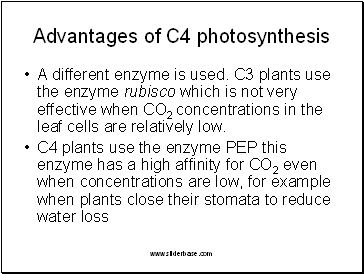 Our goal is to make science relevant and fun for everyone. Water marked with an isotope of oxygen (18O) was used in early experiments. It is prevalent in between 5% and 10% of plants and is the cause of the growth of succulence.
 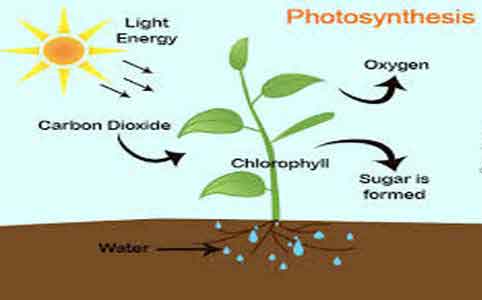 Sulfur bacteria use hydrogen sulfide (H2S) as a source of hydrogen atoms and produce sulfur instead of oxygen during photosynthesis. When it reaches a critical level of about 50 ppm the rubisco stops fixing CO2 and begins to fix O2 instead. This CO2 then enters the Calvin cycle in a chloroplast of the bundle sheath cell and produces G3P and subsequently sucrose, starch and other carbohydrates that enter the cells energy transport system. In past ages, green plants and small organisms that fed on plants increased faster than they were consumed, and their remains were deposited in Earths crust by sedimentation and other geological processes. This is due to the fact that c4 cam pathways use a different type of molecule, called c4-phosphoenolpyruvate, to produce energy. As a result, the plant conserves water and avoids damaging the suns surface.
  This assimilation of inorganic carbon into organic compounds is called carbon fixation. The only organisms able to exist under such conditions would be the chemosynthetic bacteria, which can utilize the chemical energy of certain inorganic compounds and thus are not dependent on the conversion of light energy. WebC3 plants have the disadvantage that in hot dry conditions their photosynthetic efficiency suffers because of a process called photorespiration. Many desert trees, such as acacias, shed their leaves to avoid drought; they cannot store much water in their trunks, but they can survive by losing leaves. Photosynthetic organisms that undergo C3 photosynthesis begin the process of energy conversion, known as the Calvin cycle, by producing a three-carbon compound called 3-phosphoglyceric acid. The advantage that comes from this two-stage process is that the active pumping of carbon into the bundle sheath cell and the blocking of oxygen produce an environment with 10-120x as much CO2 available to the Calvin cycle and the rubisco tends to be optimally utilized. He holds a B.A. What did Jan Ingenhousz discover about photosynthesis? C3 Photosynthesis Photosynthetic organisms that undergo C3 photosynthesis begin the process of energy conversion, known as the Calvin cycle, by producing a three-carbon compound called 3-phosphoglyceric acid. With stomata open only at night when the temperature is lower and the relative humidity higher, the CAM plants use much less water than either C3 plants or C4 plants. Triose phosphate must be present in the cycle to allow the CO2 acceptor, ribulose 1,5-bisphosphate (RuBP), to regenerate during the third regenerative phase. The class of plants called C3-C4 intermediates and the CAM plants also have better strategies than C3 plants for the avoidance of photorespiration. How can a map enhance your understanding? provided correct acknowledgement is given. Plants in the C4 family use carbon dioxide fixation and Calvin cycles in addition to reducing photorespiration. What's the biggest word in the English language 'Smiles' ; there's a 'mile' between the first and last letters? This loss to the system is why C3 plants will outperform C4 plants if there is a lot of water and sun. Alexander Eliot has been a professional writer since 2006. Water, minerals, and nutrients are absorbed by tree roots and plant roots from the soil. Molecular catalysis plays an essential role in both natural and artificial photosynthesis (AP). In the future such genetic engineering may result in improvements in the process of photosynthesis, but by the first decades of the 21st century, it had yet to demonstrate that it could dramatically increase crop yields. With the energy absorbed from sunlight, photosynthetic compounds convert these enzymes to ADP and NADP+.